
In many places, significant investment has gone into building referral pathways that help identify social needs and connect people to community supports, but far less investment has been directed toward strengthening the community programs that people are referred into.
This imbalance creates what Calgary Seniors refers to as the Community Support Gap.
COMMUNITIES ACROSS CANADA ARE WORKING TO SUPPORT A GROWING POPULATION OF OLDER ADULTS. INCREASINGLY, HEALTH AND SOCIAL SYSTEMS ARE EXPLORING APPROACHES SUCH AS SOCIAL PRESCRIBING, NAVIGATION SERVICES, AND REFERRAL PLATFORMS TO CONNECT PEOPLE WITH NON-MEDICAL, COMMUNITY-BASED RESOURCES AND SUPPORTS THAT IMPROVE THEIR HEALTH AND WELLBEING.
While these efforts help identify social needs and guide people toward assistance, an important challenge is emerging: In many places, significant investment has gone into building referral pathways, but far less investment has been directed toward strengthening the community programs that people are referred into.
This imbalance creates what Calgary Seniors refers to as the Community Support Gap.
When referral systems grow faster than the community supports that receive those referrals, programs can become overwhelmed, navigators struggle to find appropriate (or sometimes even any) options, and individuals may not receive the meaningful connection they are seeking, or require.
REFERRAL PATHWAYS MATTER, BUT THEY ONLY WORK WHEN COMMUNITIES ALSO INVEST IN THE PRACTICAL, RELATIONSHIP-BASED SUPPORTS PEOPLE ARE REFERRED INTO.
Through more than three decades of operating volunteer-powered programs, Calgary Seniors has observed that strong communities rely on more than individual services. They function as interconnected systems where community participation, program infrastructure, operational capacity, and shared values work together to support wellbeing.
In many places, significant investment has gone into building referral pathways that help identify social needs and connect people to community supports.
These pathways often include
These systems play an important role in helping people access support. However, far less investment has gone into strengthening the community programs that receive those referrals.
This imbalance creates what we refer to as the Community Support Gap.
This gap occurs when referral systems are developed faster than the community supports people are being referred to.
Bridging this gap requires strengthening the Wellbeing Infrastructure: the practical, relationship-based supports that people are referred into, and which help them remain connected, supported, and engaged in their communities.
In the Connected Community Model, addressing the Community Support Gap means investing in the Wellbeing Infrastructure and community participation that allow referral systems to function more effectively.
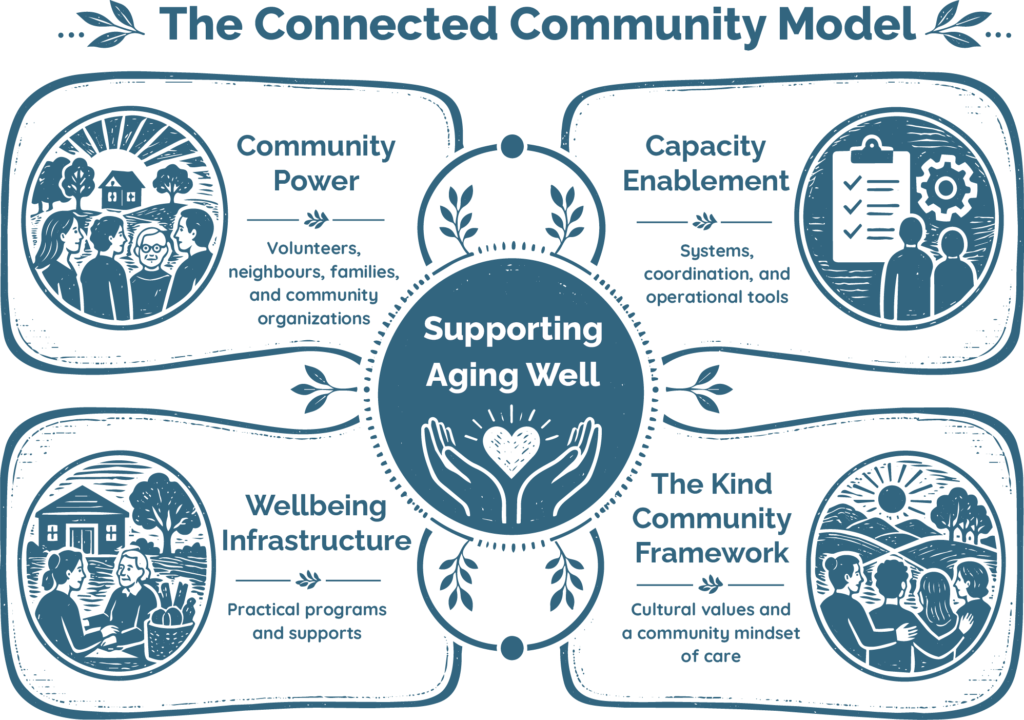
THE CONNECTED COMMUNITY MODEL HAS BEEN DEVELOPED TO DESRIBE THIS ECOSYSTEM.
The model identifies four interconnected layers that help communities support aging well:
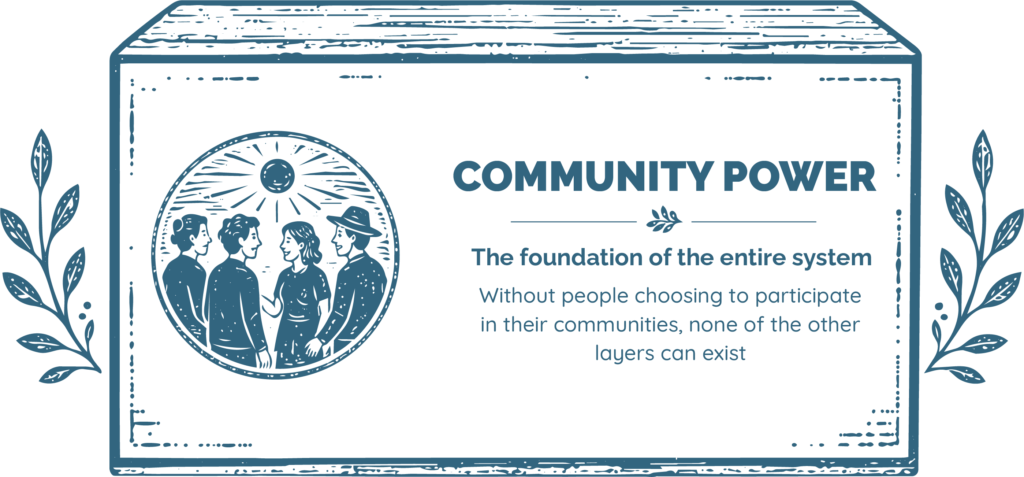
COMMUNITY POWER
The foundation of the entire system
The participation of volunteers, neighbours, families, and community organizations who contribute to collective wellbeing.
Without people choosing to participate in their communities, none of the other layers can exist.
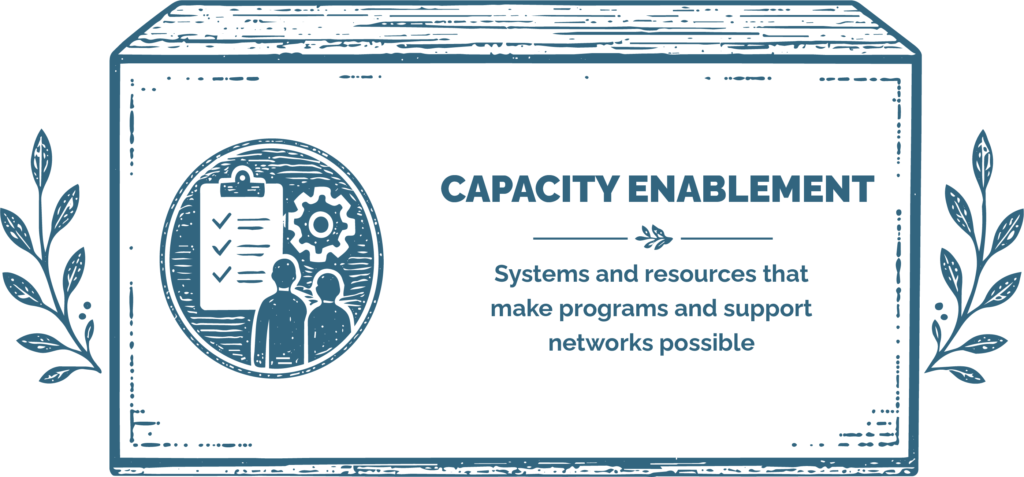
CAPACITY ENABLEMENT
Systems and resources that make programs and support networks possible
The systems, coordination, and operational tools that allow community programs to function effectively.
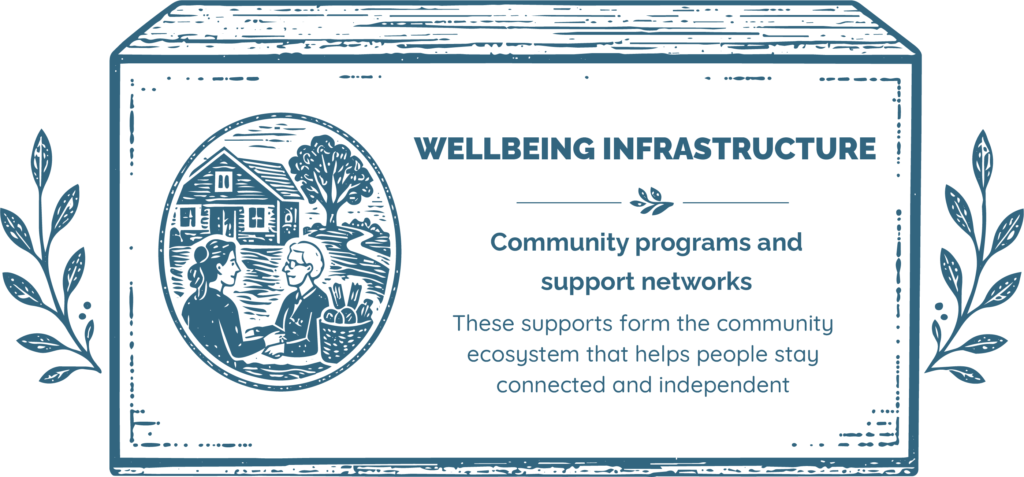
WELLBEING INFRASTRUCTURE
Community programs and support networks
The practical programs and supports that people are referred into, and which help them remain connected, independent, and engaged in their daily lives.
These supports form the community ecosystem that helps people stay connected and independent.
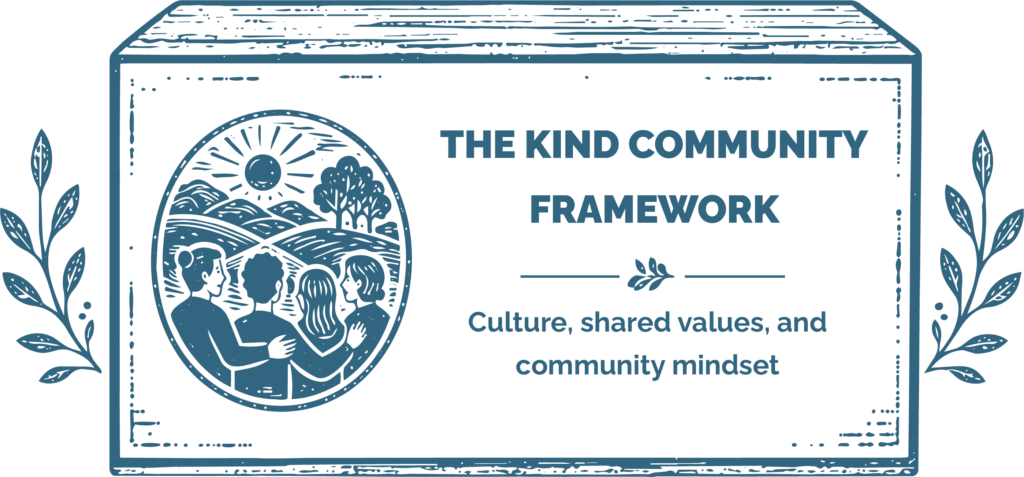
THE KIND COMMUNITY FRAMEWORK
Culture, shared values, and community mindset
The cultural values and community mindset that encourage people to care for one another and participate in community life.
TOGETHER, THESE FOUR LAYERS FORM THE FOUNDATION OF A STRONG COMMUNITY SUPPORT SYSTEM.
By strengthening these elements and addressing the Community Support Gap, communities can create environments where older adults remain connected, supported, and valued members of society.
THE CONNECTED COMMUNITY MODEL OFFERS A PRACTICAL WAY TO UNDERSTAND HOW COMMUNITY PARTICIPATION, PROGRAMS, SYSTEMS, AND CULTURE WORK TOGETHER TO SUPPORT HEALTHY AGING.
IN MANY PLACES, SIGNIFICANT INVESTMENT HAS GONE INTO BUILDING REFERRAL PATHWAYS THAT HELP IDENTIFY SOCIAL NEEDS AND CONNECT PEOPLE TO COMMUNITY SUPPORTS.

These pathways often include:
These systems play an important role in helping people access support. However, far less investment has gone into strengthening the community programs that receive those referrals.
This imbalance creates what we refer to as the Community Support Gap.
The Community Support Gap occurs when referral systems are developed faster than the community supports people are being referred to.
Without strong Wellbeing Infrastructure in place:
AT ITS CORE, THE COMMUNITY SUPPORT GAP REFLECTS A LACK OF INVESTMENT IN THE WELLBEING INFRASTRUCTURE THAT SUPPORTS DAILY LIFE.
Bridging this gap requires strengthening the practical, relationship-based supports that help people remain connected, supported, and engaged in their communities.
In the Connected Community Model, addressing the Community Support Gap means investing in the Wellbeing Infrastructure and the community participation that empowers referral systems to function effectively.
Many systems have focused on building referral pathways that connect people to community supports. While these efforts are important, referrals alone do not guarantee meaningful connection.
WHAT MATTERS JUST AS MUCH IS THE STRENGTH OF THE COMMUNITY PROGRAMS AND NETWORKS THAT RECEIVE THOSE REFERRALS. THIS IS WHERE MANY COMMUNITIES ENCOUNTER THE COMMUNITY SUPPORT GAP.
FOR SOCIAL PRESCRIBING TO SUCCEED, INVESTMENT MUST STRENGTHEN BOTH SIDES OF THE SYSTEM:
Referral Pathways
AND
Wellbeing Infrastructure
Communities benefit from investing in the culture and participation that empower these supports to thrive.
For social prescribing to succeed, communities must address the Community Support Gap by strengthening both referral pathways and Wellbeing Infrastructure.
(Kadowaki, et al., 2024) argues that “[t]he need for a strong nonprofit and voluntary service
sector to support social prescribing programs” is necessary.
(Hamilton-West, Milne, & Hotham, 2020) highlights the need for funding and support for the programs that are being linked to by social prescription. They emphasize that there is often a lack of funding for services that are offered on the other end of the referral.
At Calgary Seniors, our work focuses on strengthening all layers of the community wellbeing system.
TOGETHER, THESE EFFORTS HELP CREATE COMMUNITIES WHERE OLDER ADULTS REMAIN CONNECTED, SUPPORTED, AND VALUED.